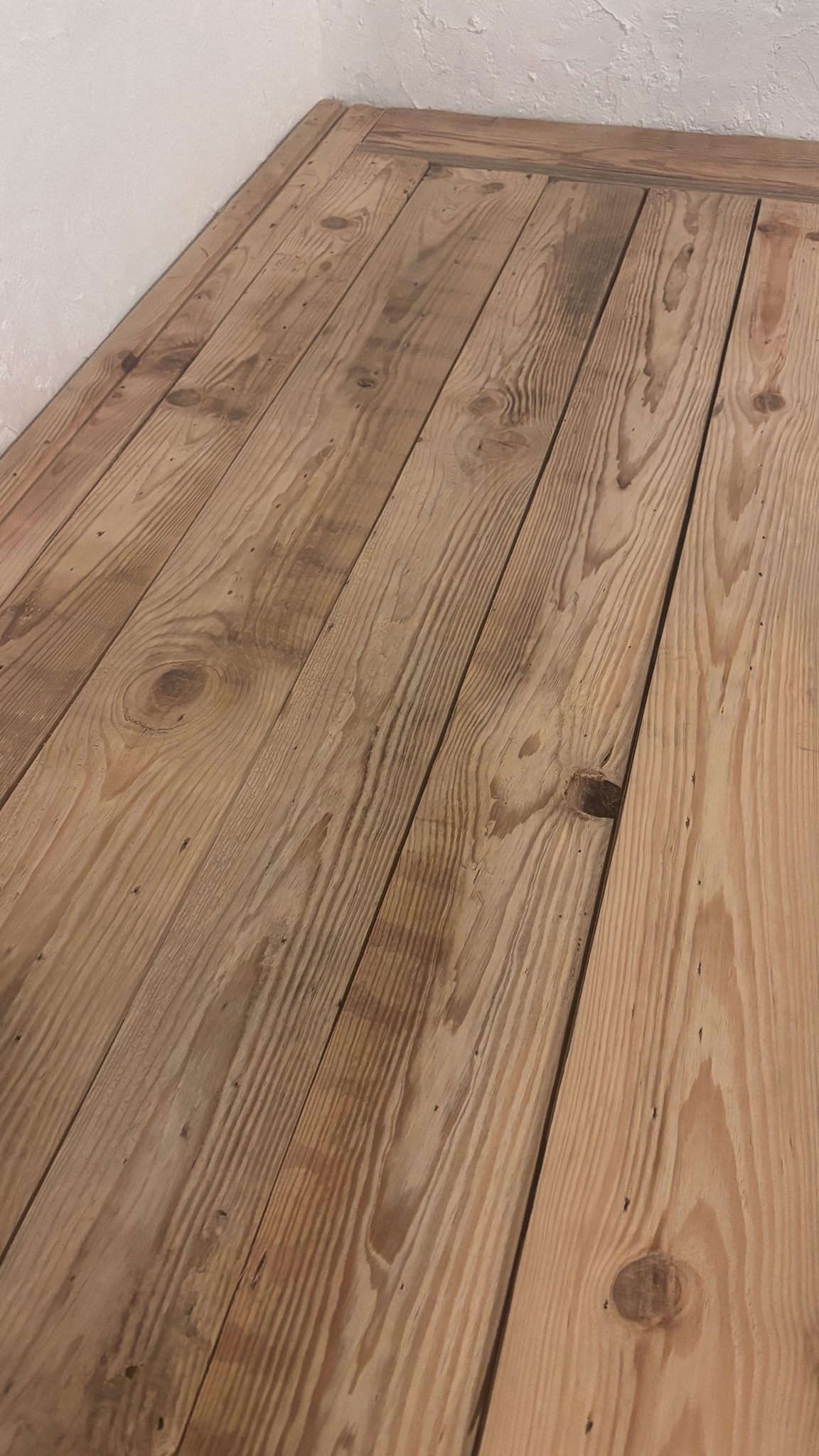
Ninety years ago, this now reclaimed chestnut was hewed into shape to build our internal walls at Casa Grande. This week we reclaimed a wall, turning it into the workstation bench in our new office and reading area.
The wall that had to go
A wall between two of our rooms had previously been removed to make a larger bedroom area. At the time, taking it out was the easy, obvious decision. Deciding what to do with what came out of it was the interesting one.
Inside was a run of old chestnut timber, roughly ninety years old, which had steadfastly done its job for most of a century. Chestnut has long been a building timber across rural Portugal, because it is tough and it lasts. Sending it to a skip or the fire never felt like an option. If it had survived ninety years of holding a house together, it deserved a second life as something we would use every day.
Marking up and a trial fit
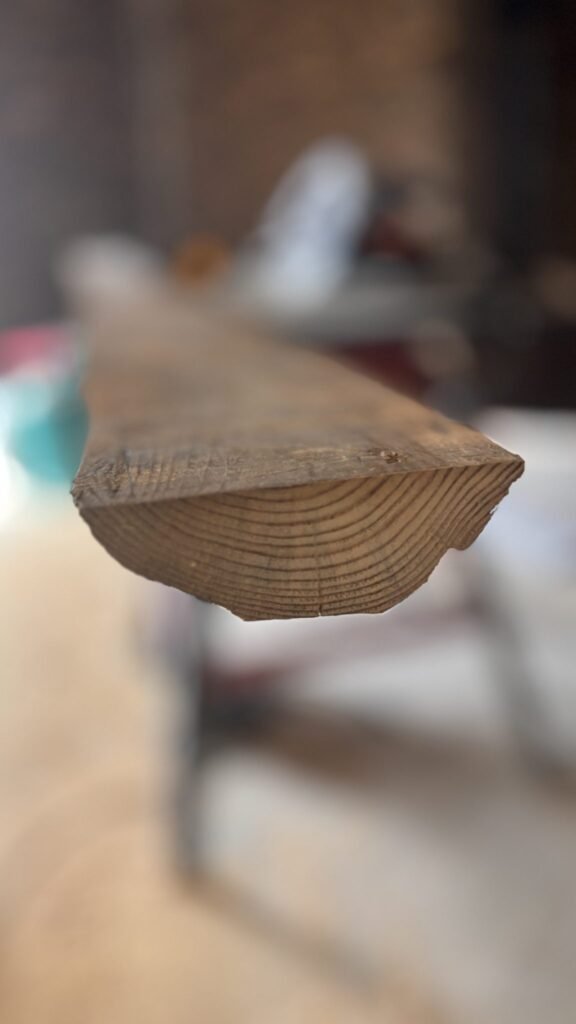
Reclaimed chestnut does not come out of a wall ready to use. Ours was grey with age, scarred by saw marks and pocked with rows of old nail holes where the laths had been attached. Some lengths were twisted, and some carried proud, dark knots. Exactly why we wanted to keep it.
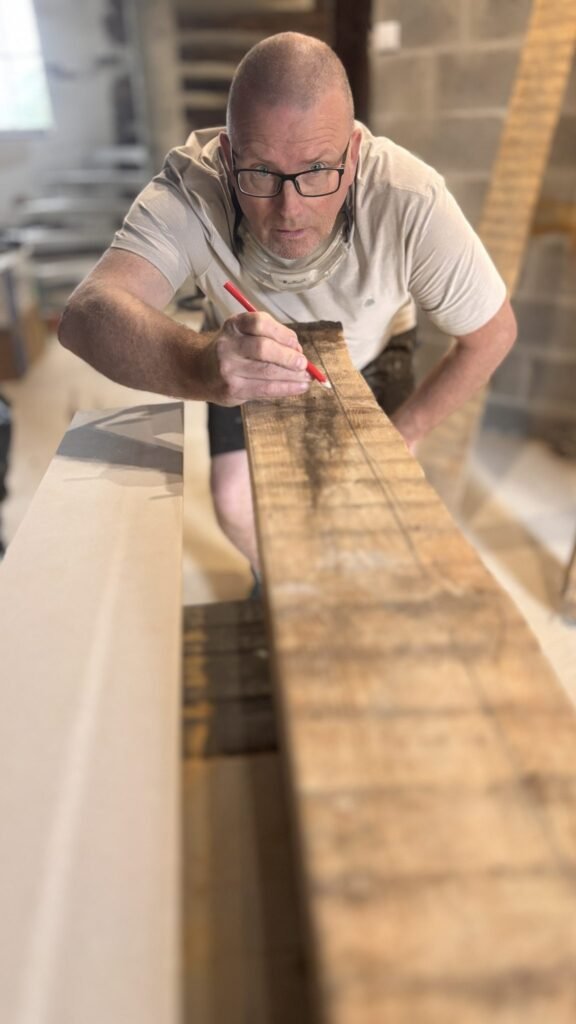
I began by marking up with a very professional looking red carpenter’s pencil, following the natural line of each board rather than forcing a perfectly straight edge. Measure, look, then measure again.
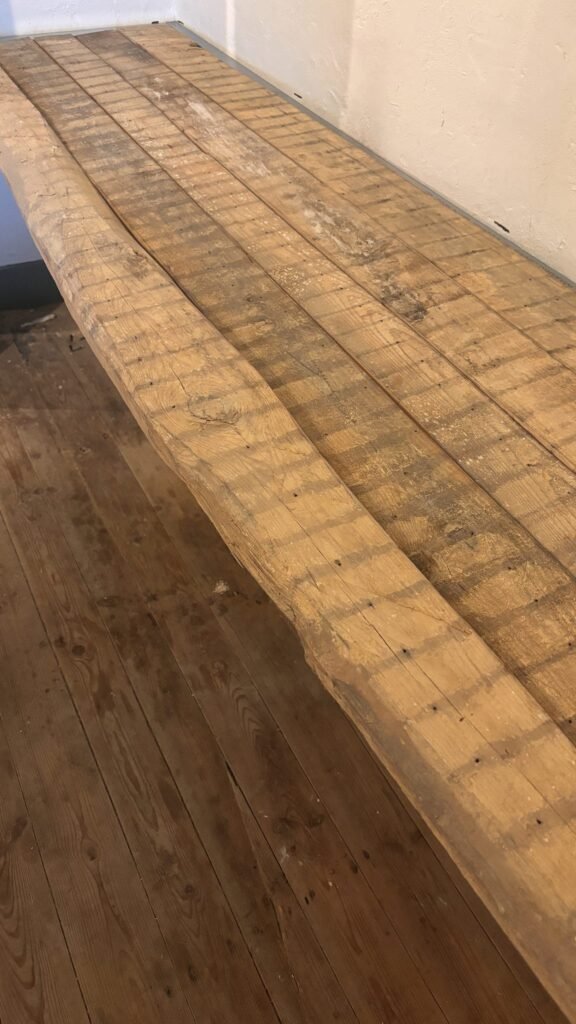
Then I laid the rough timbers across the frame to see how they would sit, and what would need to be tamed. The outer edge kept its curve, and I decided early that it should stay that way.
A steel frame, levelled by laser
Beneath all that warm, imperfect timber, we wanted something dead straight. I built a galvanised steel frame along the wall and used a cross-line laser to set it true, because nothing in an old farmhouse is ever quite square.
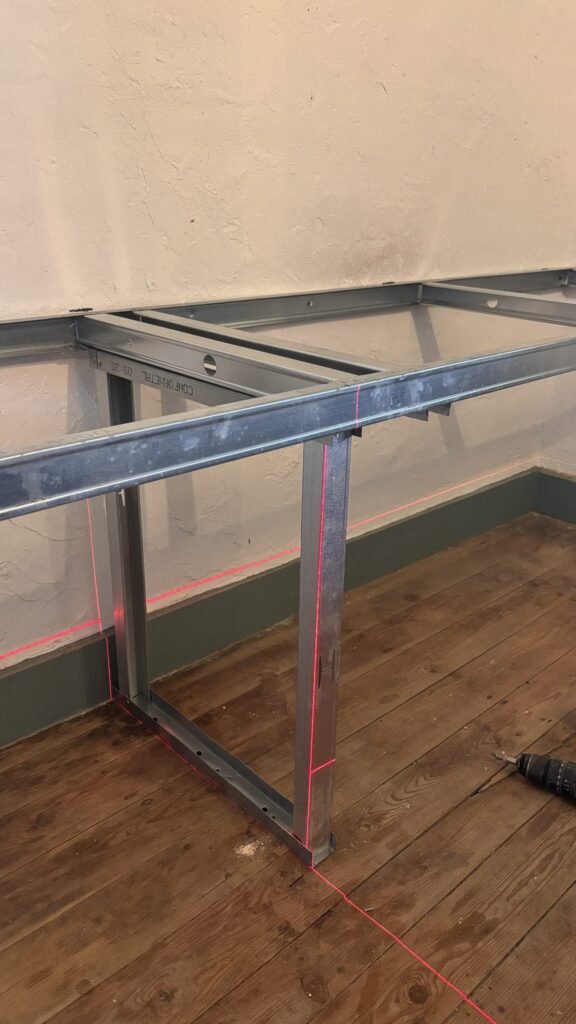
We like the contrast: precise steel underneath, hand-worked chestnut on top. It is a fair summary of how we are approaching the whole house.
Barney and the thicknesser
This is where our good friend Barney came in. Barney lives locally and owns a planer thicknesser, which turned a daunting job into a manageable one. Reclaimed timber can hide nails and grit that are hard on any blade, so it helps enormously to have a good machine and someone who knows how to feed it.
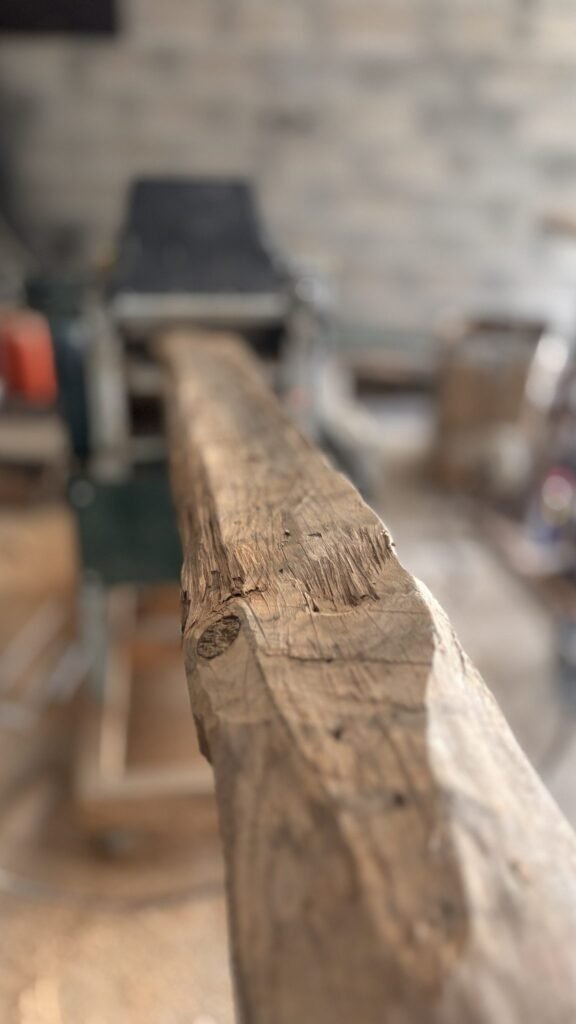
Board by board, the machine brought each length to a fairly consistent thickness, and the colour beneath the grey began to show.
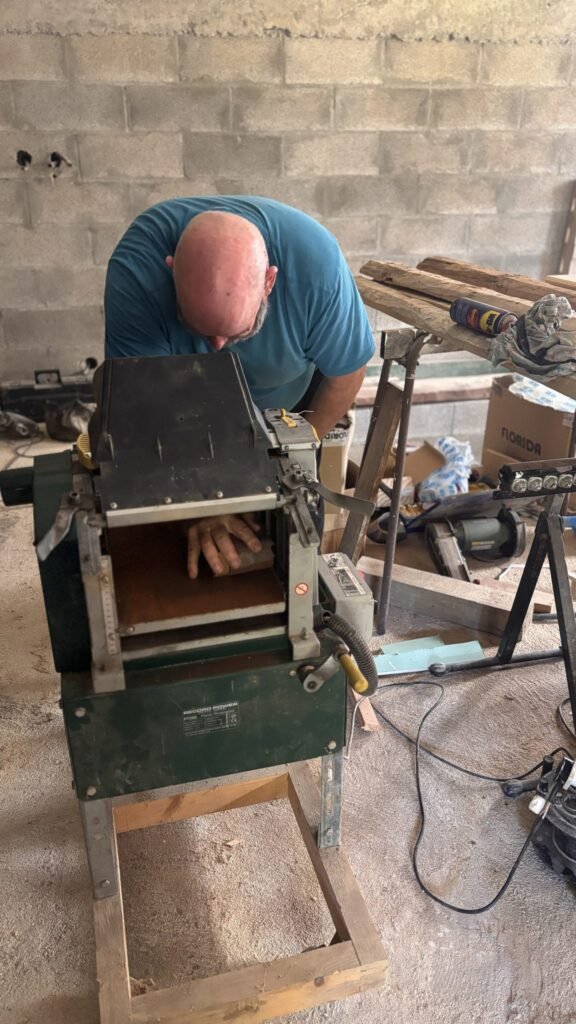
It was noisy work! But a welcomed lunch was supplied by Barney’s wife, Shirley: chips and salad, and exactly what a workshop day calls for.
Sanding by hand
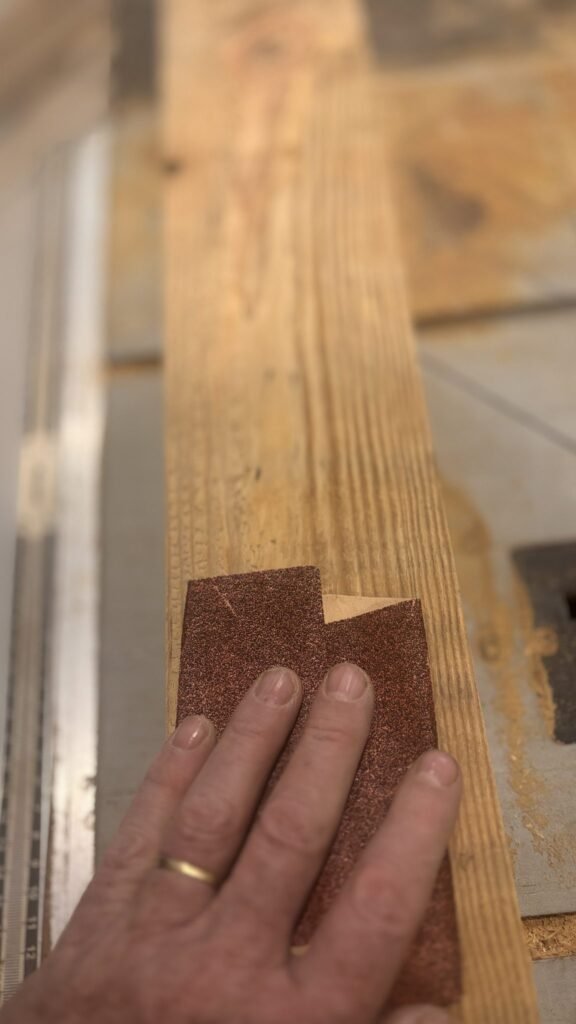
After the machine came the slow part. Sanding and hand planing is slower, but it lets you feel the grain, and it keeps the texture of the wood rather than flattening it into something anonymous. A folded sheet of paper, a steady hand and a lot of patience brought the chestnut up from ninety years of grey to something warm.
One workstation bench
The boards went back onto the frame, each beside a neighbour chosen for its grain, its knots and its colour. The result is a long, generous bench that follows the wall into the corner, with the original curve of the timber still visible along its front edge.
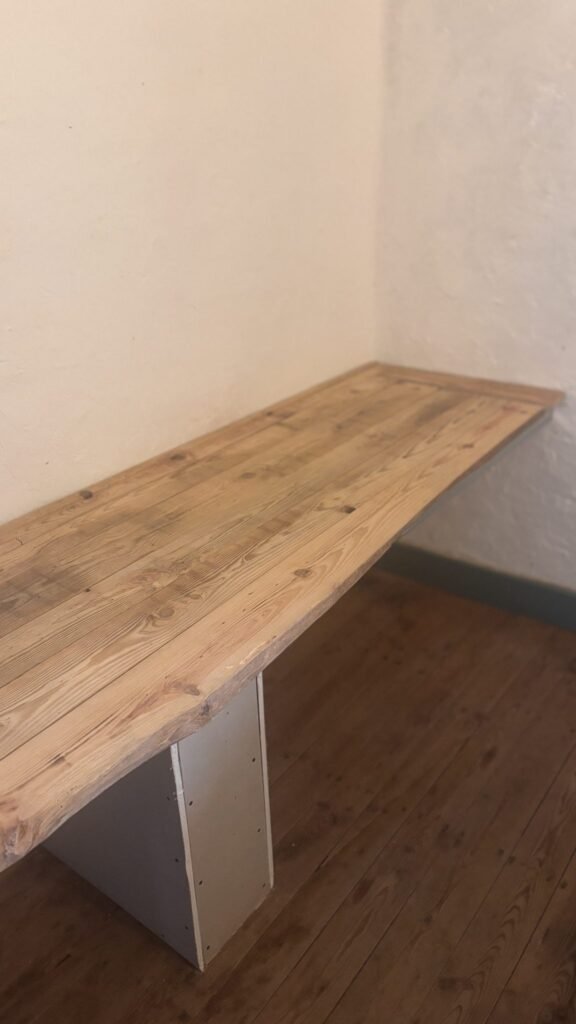
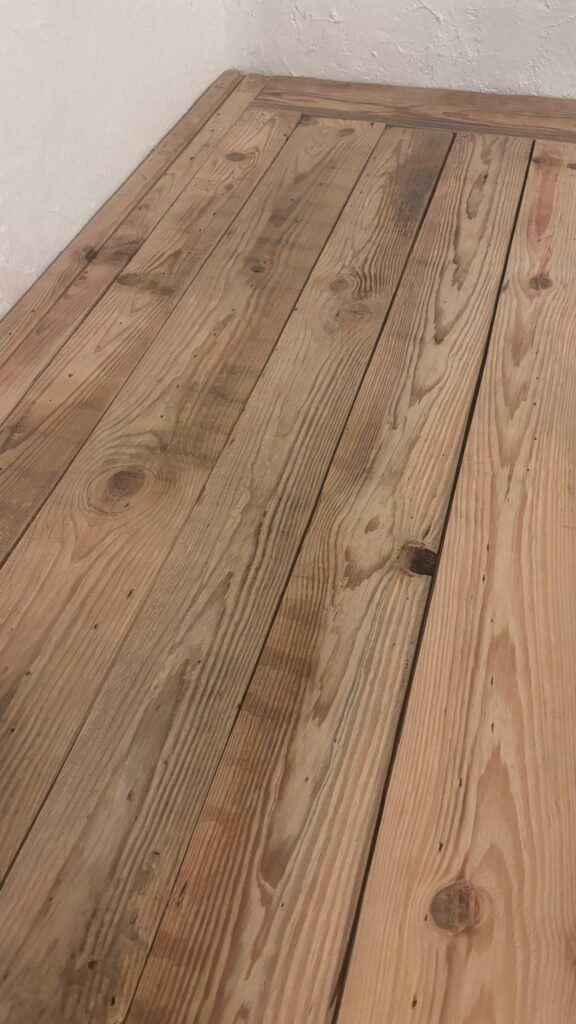
Every knot and every old nail hole is still there. We did not want to hide them. They are the record of a wall that stood for ninety years, and they are what make the bench ours.
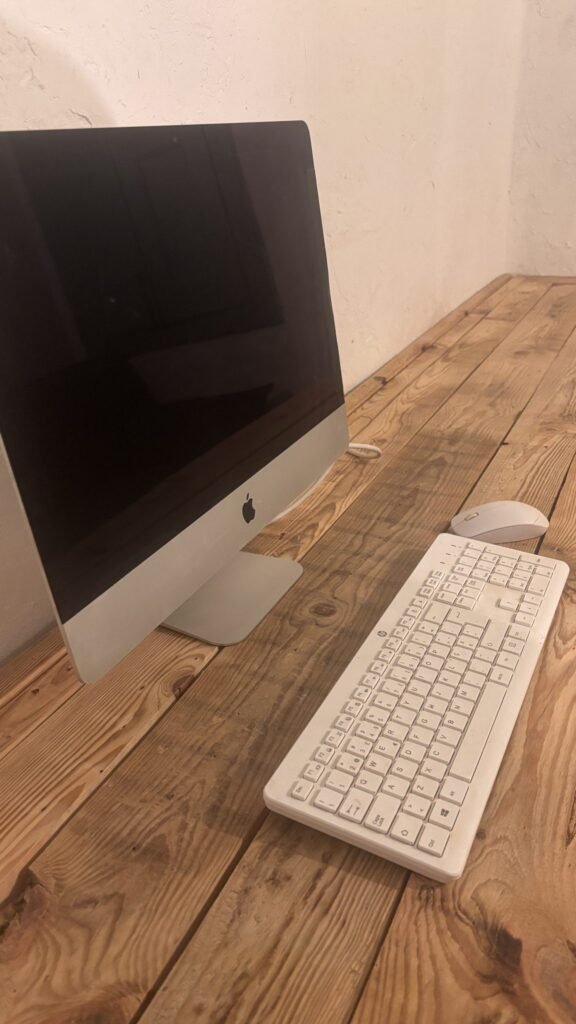
Then came the real test: putting a computer on it. The first work done at this bench will be renovation planning, writing, designing and building websites, which feels about right for a room that is becoming an office and reading area for Casa Grande, our vegan literary retreat in progress.
Thank you
This bench was not a solo effort. Thank you to Barney, for the use of his thicknesser and the skill to go with it, and to Shirley, for the chips and salad that kept us going.
If you would like to watch it come together in thirty seconds, the reel is on our Instagram, @anossacasagrande.