
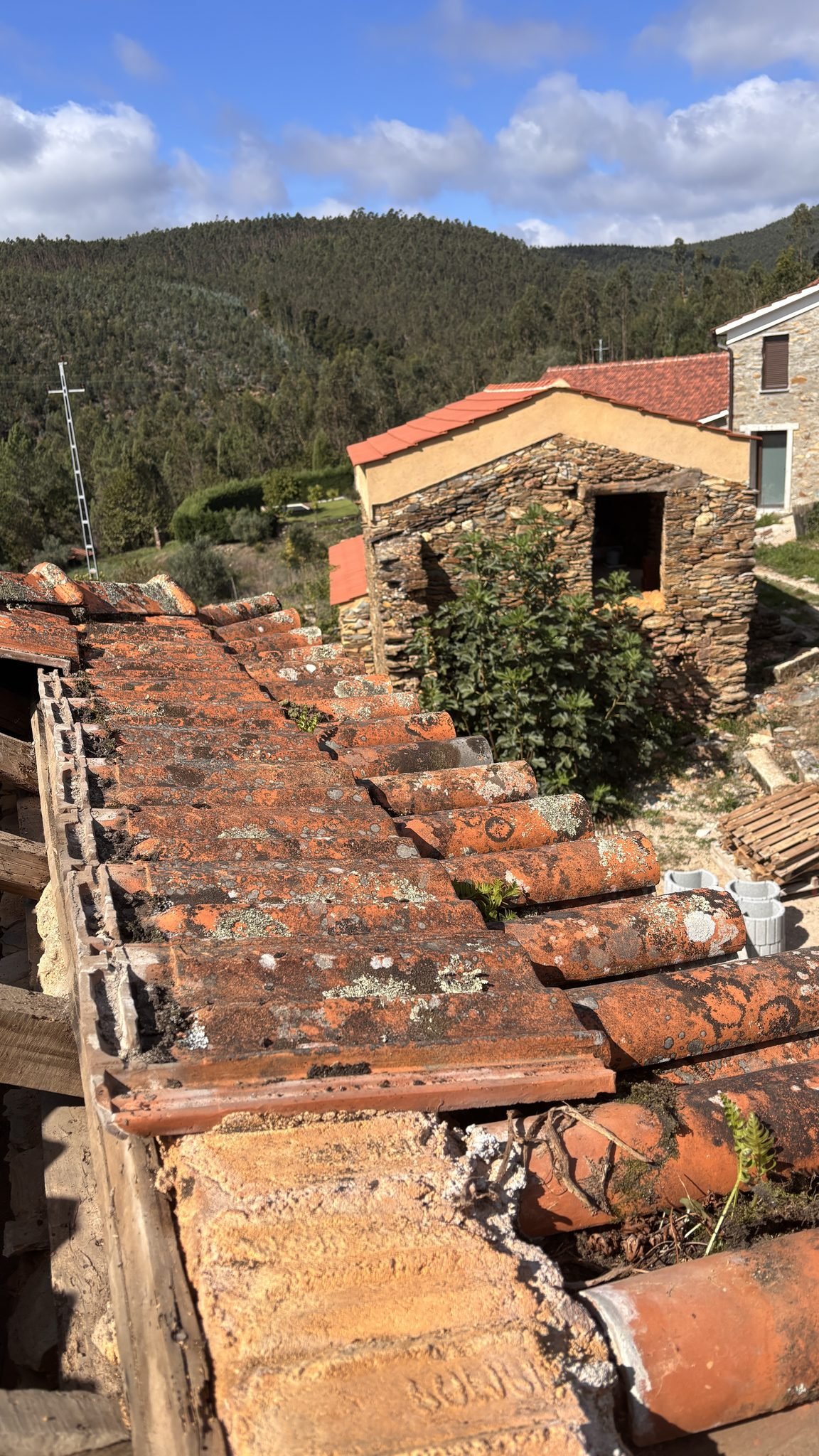
This autumn I spent a week on a temporary roof repair at Casa Grande, and it was finished just in time. For years, rain has been finding its way through the old roof and running down the inside of the walls. With winter coming, it was time to close the holes, stop the ridge leaking and get the rainwater off the front of the house.
Why the roof needed a temporary roof repair
Water has been getting into the house for as long as we have owned it. Some of it comes through gaps along the eaves, and some through the ridge at the top of the roof. Once inside, it runs down the walls, and over the years it has taken its toll.
The worst damage is at the front corner of the house. The front elevation has no guttering, so every drop that lands on that side of the roof pours straight off the edge and onto the base of the wall. From there it soaks into the stonework and finds its way into the adega, the old ground-floor store where our new kitchen is going. With the kitchen build about to start down there, the last thing we wanted was another wet winter.
Working from the inside
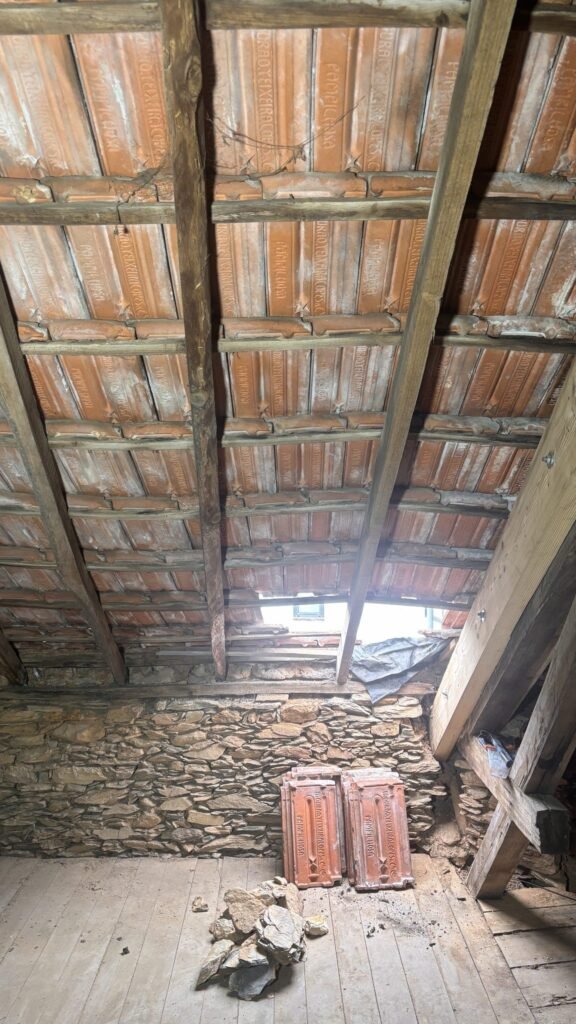
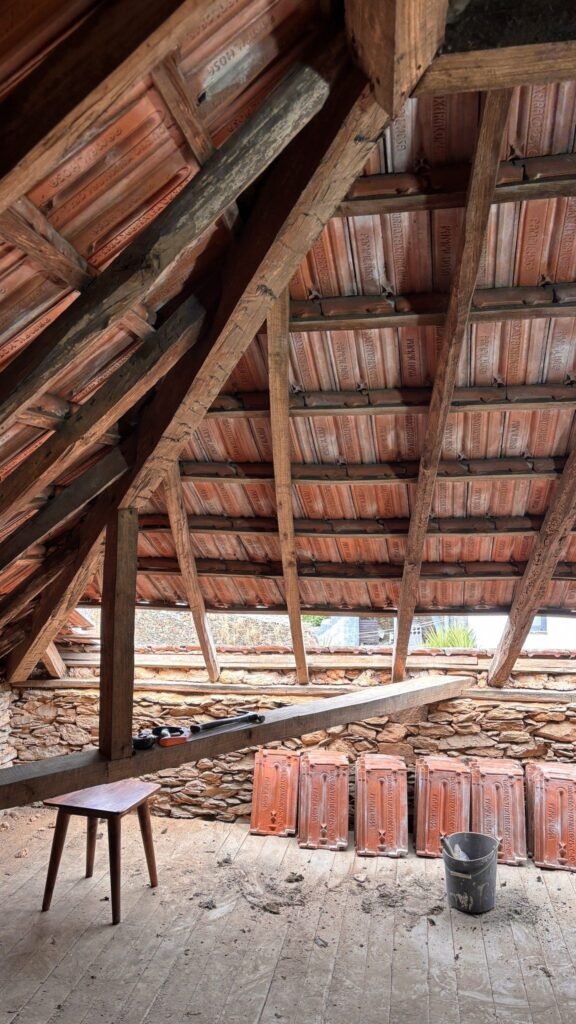
The front of Casa Grande sits straight onto the village’s main street, the rua principal. It is a long way up, and any work from the outside would have meant working above a busy village road. So rather than climbing up the outside, I did the whole temporary roof repair from inside the roof space.
The trick was to take off two rows of the original terracotta tiles. With those out of the way, I could reach up to the ridge that had been leaking and reach down to the front edge of the roof where the guttering needed to go, all while standing safely on the attic floor. It turned a job for scaffolding into a temporary roof repair I could do on my own.
Our original Pampilhosa tiles
Every tile that came off was stacked carefully against the wall to go back on. They are the house’s original tiles, each stamped with the name of where they were made: Pampilhosa, near Mealhada, not far from us here in Mortágua.
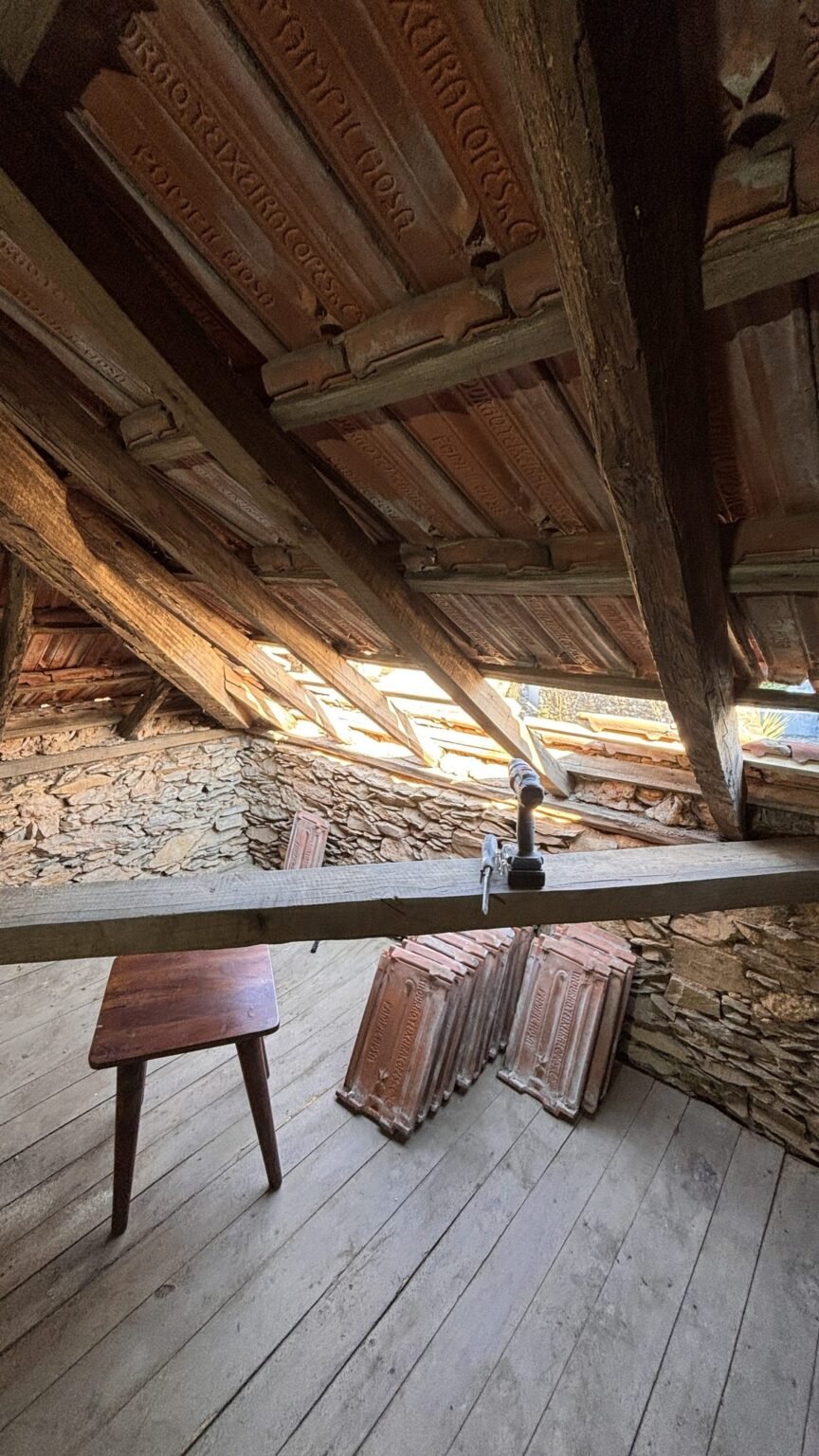
Old roof tiles like these are worth keeping. They have weathered to a colour no new tile can match, and they are part of the character of the house.
Sealing the leaking ridge
The ridge was the main culprit. Up close, the mortar holding the ridge tiles had crumbled away, and moss and weeds had taken root in the gaps. Rain had been running straight through for years.
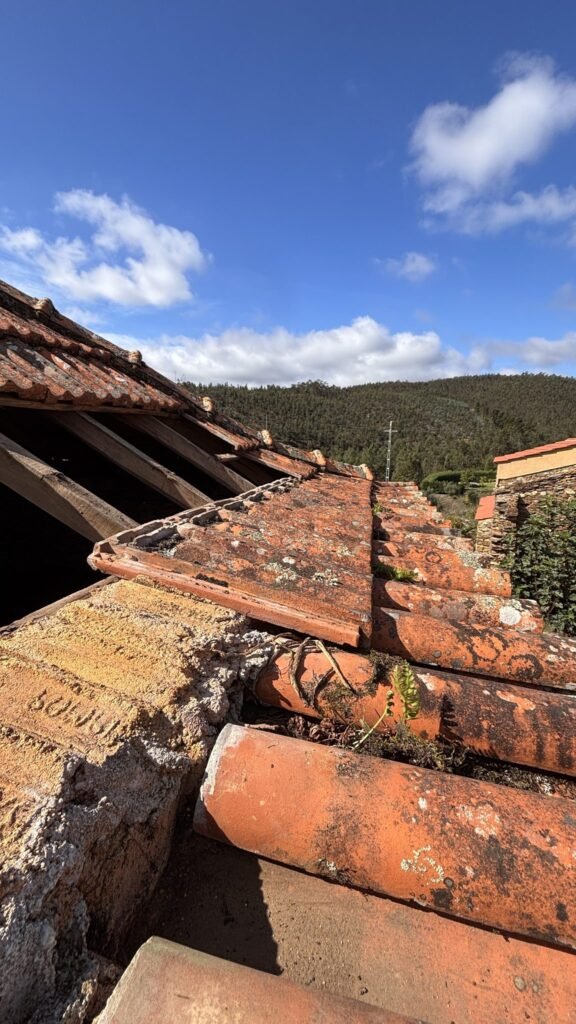
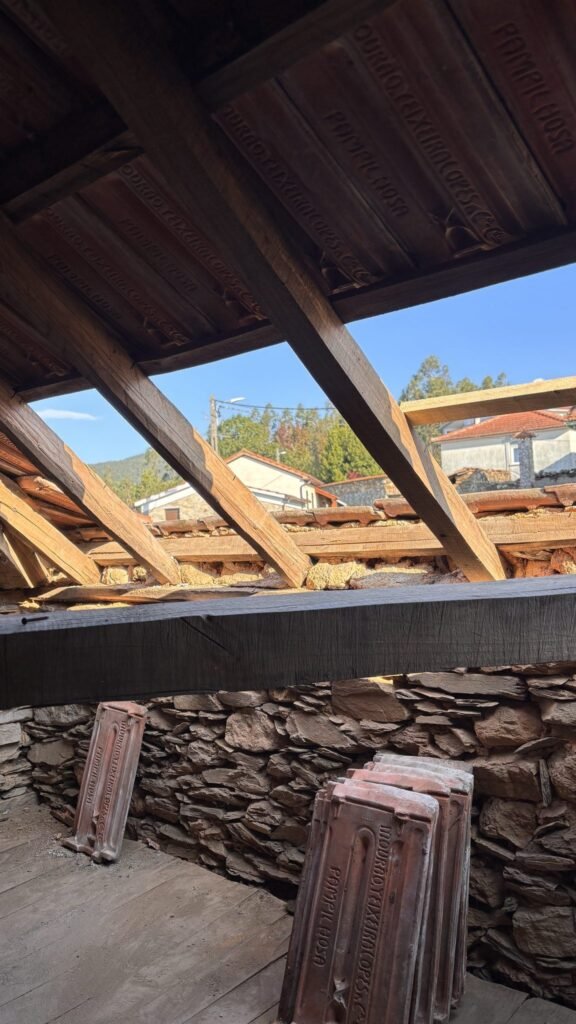
With the tiles below it lifted, I could get at the ridge from underneath and close up the holes that had been letting the water in.
Guttering for the front of the house
The second half of the temporary roof repair was the guttering. Working along the line of the front tiles from inside, I fitted new guttering to the front elevation. For the first time, the rain from that side of the roof is caught and carried away, instead of falling onto the base of the front wall.
It is a simple job on paper, but a fiddly one when you are reaching out over the eaves above the village street. A rain gutter may not be the most glamorous part of a renovation, but for an old stone house it is one of the most important.
Putting the roof back together
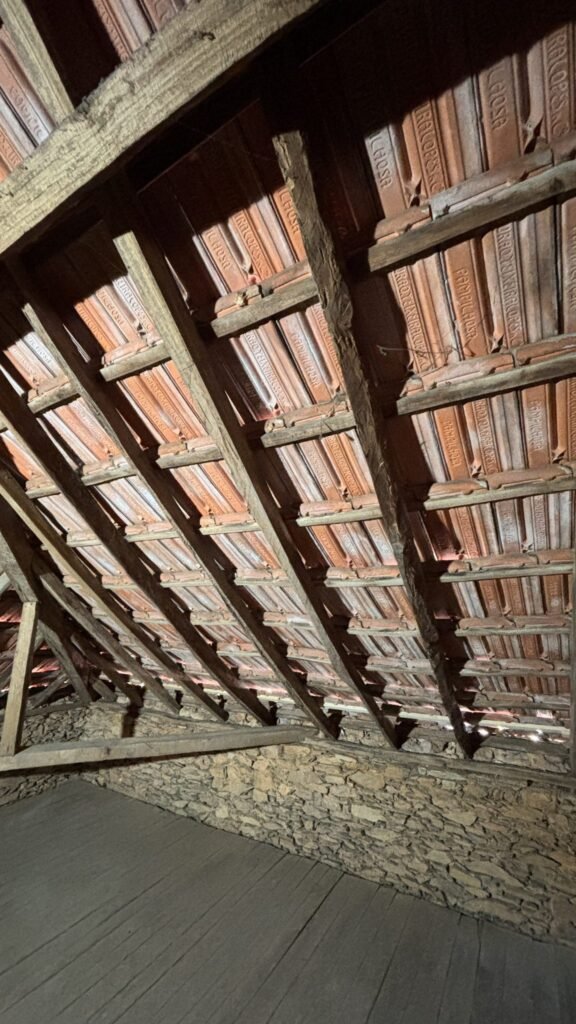
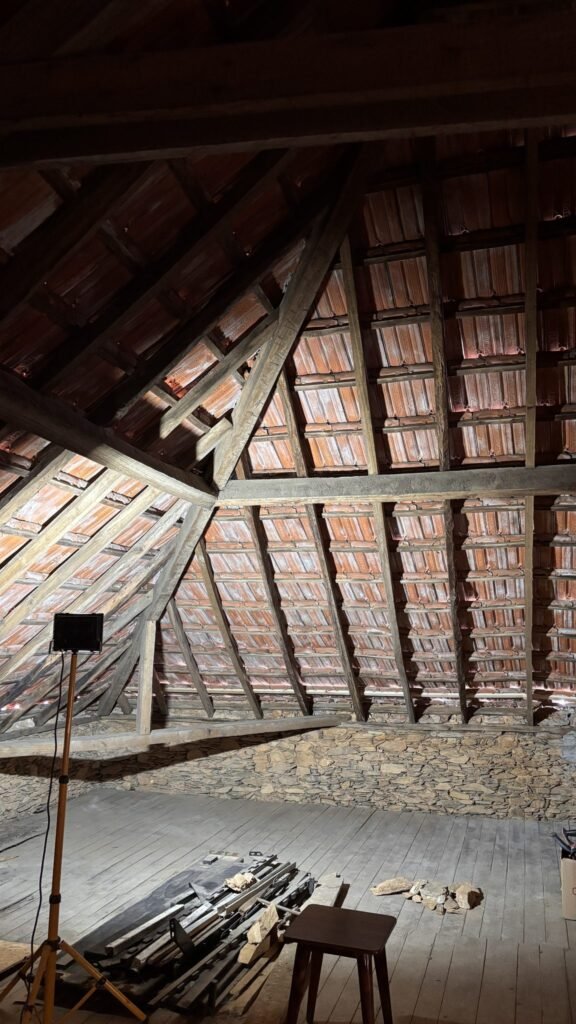
With the ridge sealed and the guttering in, the two rows of tiles went back on, one by one. By the end of the week the roof space was closed up again. It was dark where there had been daylight, which is exactly how a roof should be.
Tips for a temporary roof repair on an old house
If you have an old Portuguese house with a leaking roof and a full renovation is still years away, here is what this job taught me:
- Look from inside on a sunny day. Every chink of daylight in the roof space is a place the rain can get in. It is the quickest way to find the holes.
- Check the ridge first. Old mortar along the ridge cracks and crumbles long before the tiles fail.
- Deal with the water at the bottom too. Stopping the leaks is only half the job. Without guttering, the rain lands at the foot of the wall and soaks into the stone.
- Consider working from the inside. If the roof is high or over a road, lifting a few rows of tiles from the roof space can be safer than going up the outside.
- Keep the old tiles. Stack them carefully and put them back. A temporary roof repair should buy time without losing anything original.
Did the temporary roof repair work?
Yes. The work was finished just in time for the first rains after our long, hot summer, and those rains were the real test. The water is no longer coming in, and so far the temporary roof repair is doing exactly what we needed it to do.
This is a temporary roof repair, not a new roof. The whole roof will be replaced at some point, and that will be a much bigger project. For now, a week in the roof space has kept us dry, protected the stonework and kept the water out of the adega, where the kitchen build is about to begin.